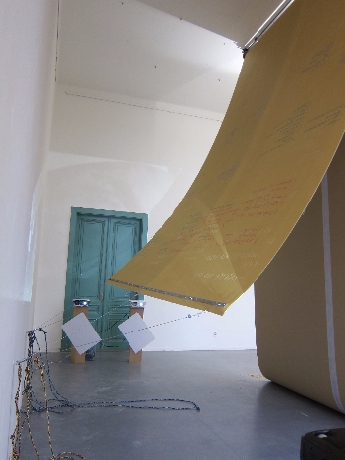
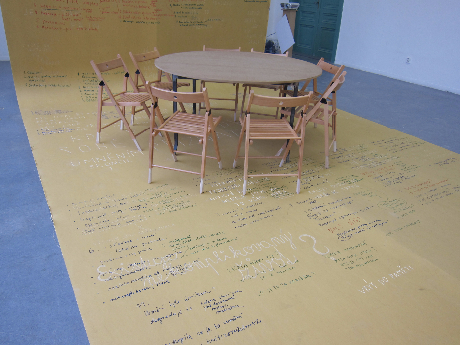
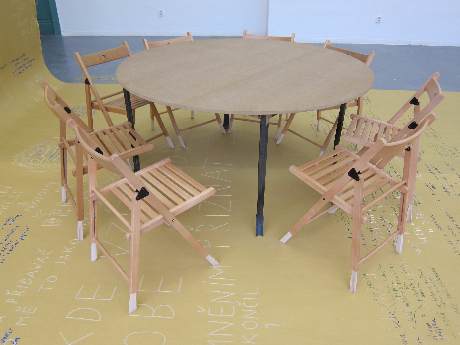
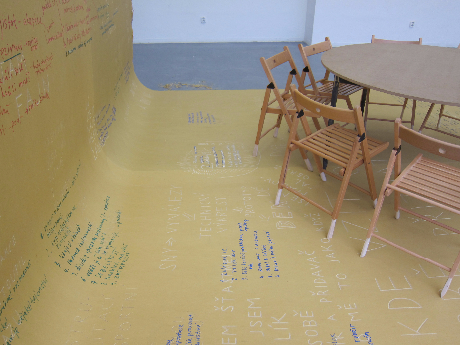
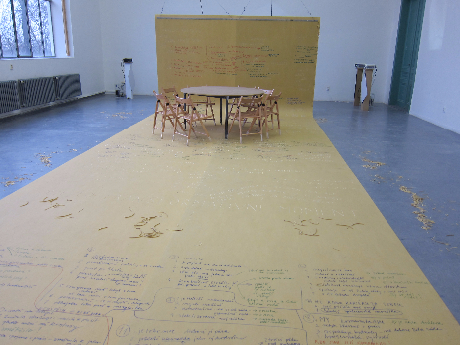
Gallery AVU, Prague, 2016
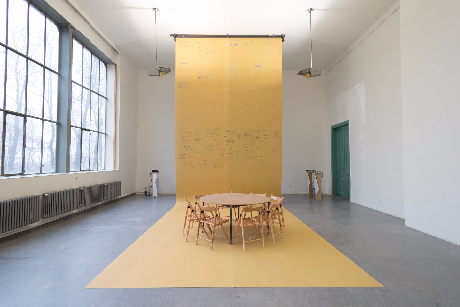
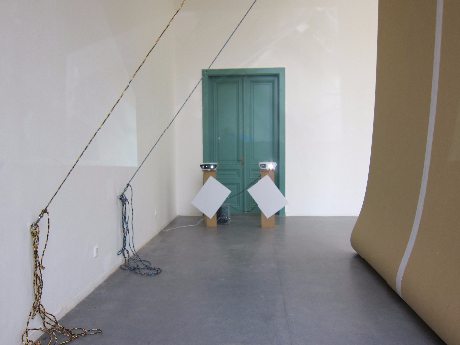
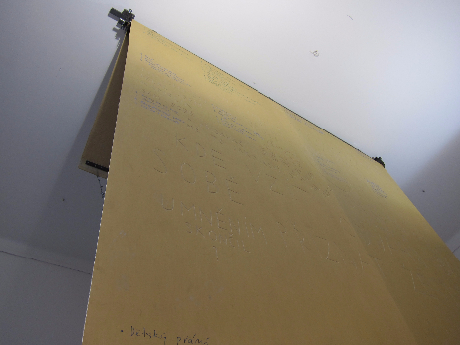
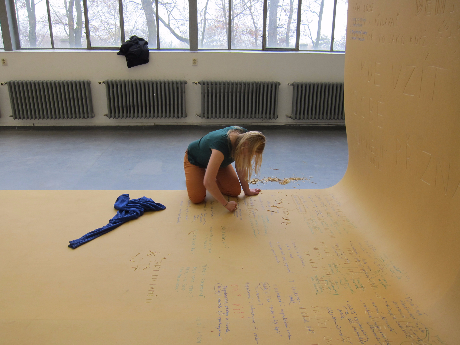
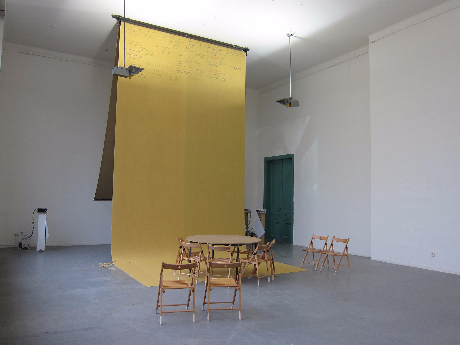
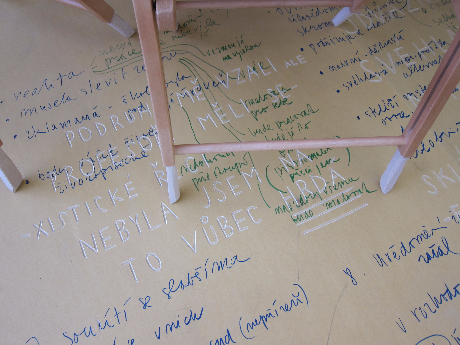
The exhibition is a backdrop on which several “blind panels” took place based on the Biographical Narrative Interpretation Method (BNIM).
It was an interpretation process with about five to seven panelists around the table. The text we worked with was the testimony of the person who graduated from the Academy of Fine Arts. The panelists didn’t know the material. The recording of the conversation was rewritten and read step by step without the knowledge of what will come next, how the narrative will evolve. After each sequence of the read text, we talked about the experience hypothesis. What is experienced by the person who told his life at that particular moment?
Then, after imagining about five speculative hypotheses, we marked for each of them about five paths of possible continuation of the narrative. For example, if this person experiences a sense of serenity when she talk about this event, what will she be talking about now? Or if she is disappointed, how will she continue, what will happen next? In the process of gradual assumptions and projections, the image was corrected, refined. For myself, this blind panel helped me to see connections I have not noticed or I have not thought about.
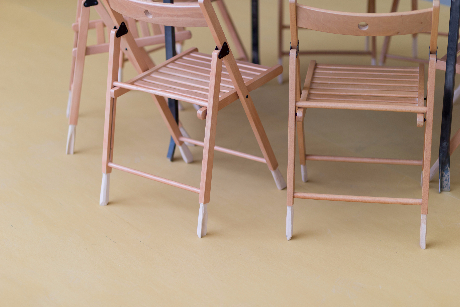
The objects in the gallery are Medium, Resource, Tool and their Allegories. A lively experience is then what has gradually been contemplated and inscribed in this space.
About projection:
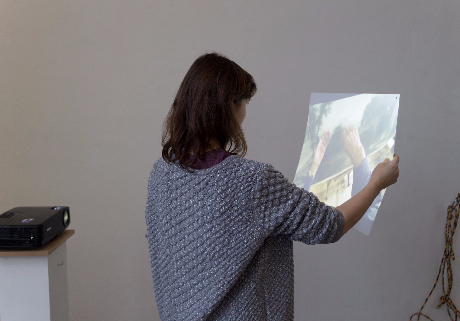
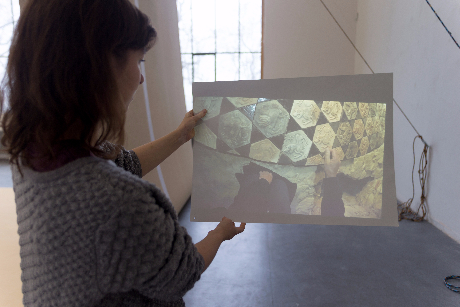
Three videos projected by the projectors on a sheet of paper held by a viewer. I have asked three different absolvents of the Academy who graduated from Fine Art, but have been restoring historical artworks as a job all their life, to take me to the location of one such as restored works. Then I asked them to try to remember how was it at that time and if they could show me how they did it. Afterwards we came to a pantomimic reconstruction of the work process. On the projection, we see their hands working. Restoration tools are imaginary. I was wondering at what point this my request would become something that they would take as a means of return to the time they restored the work. And what this experience will bring.
“Resignation by Restoration”
Sound recording on headphones. The theme of the audio is this: Many of the graduates of the Fine Arts have become restorers over time and gave up art making. If we consider resignation by restoration, the question remains what is actually restored, history, fresco, or our own dignity?