One exhibition in 4 successive interventions
Stage 1 / Drawing
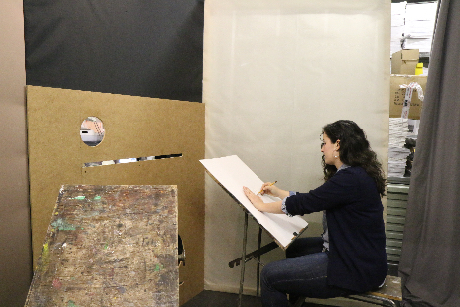
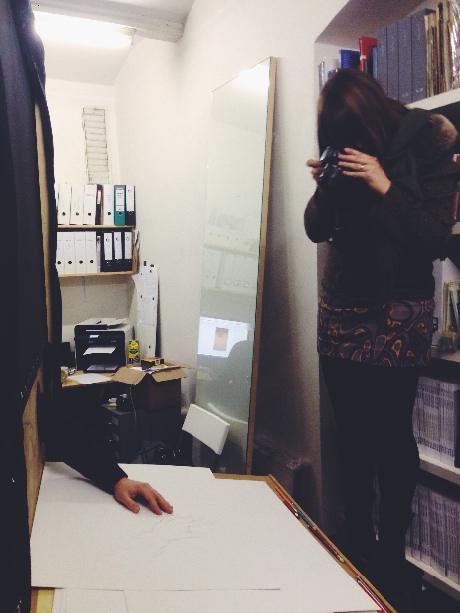
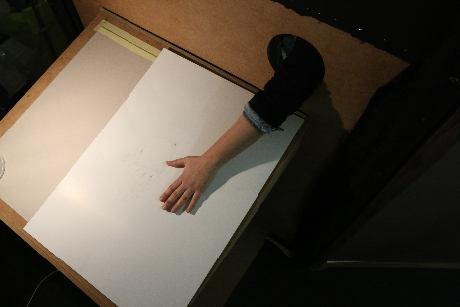
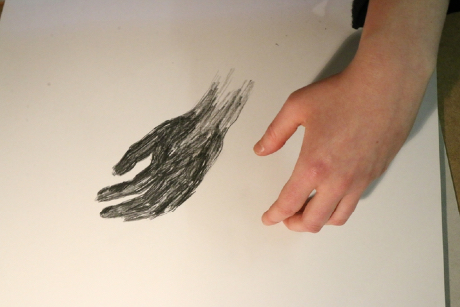
Visitors make a drawing of their hand. The visitor accepts the challenge, receive paper and pencil and sit down on one of the drawing tables available.
Unless the drawing is a 10 seconds outline of the fingers, in other words, a genuine attempt, it will be accepted and the person can be lead into the second stage of the exhibition.
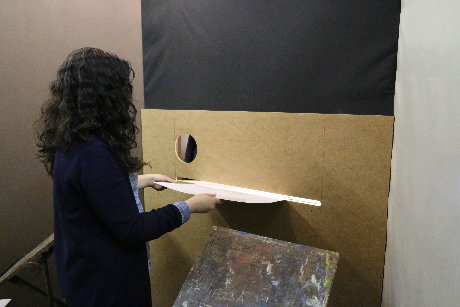
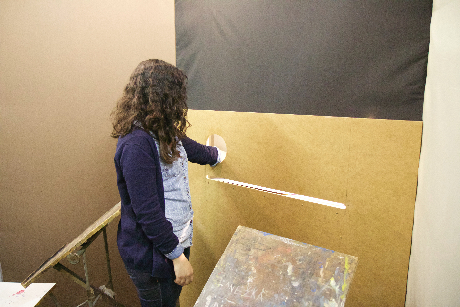
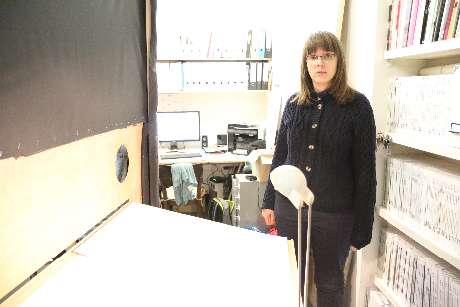
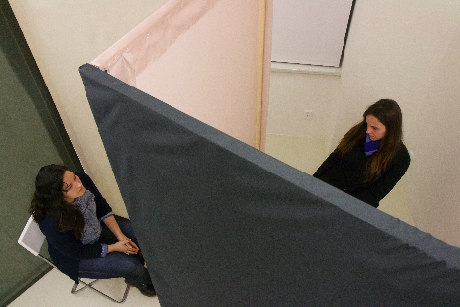
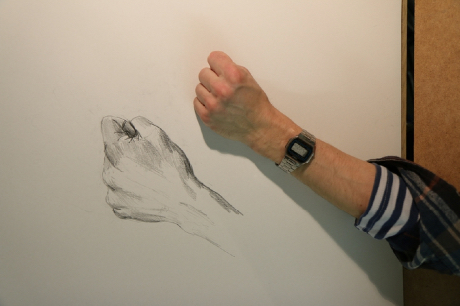
A special built construction enable interactions between staff and visitor.
Aim:
This first encounter breaks down the “going to see an exhibition modus” and prepare the visitor for the following galleries, tuning the visitor as content of the exhibition as such. Was the person accustomed to draw? How was this translation of an object in 3D (hand) into a 2D representation on paper? These are just some possible articulations of unnamed but already sensitized experiences. A photograph is made while the person is having their drawing assessed in terms of resemblance between the drawing and the hand.
Stage 2 / Stories
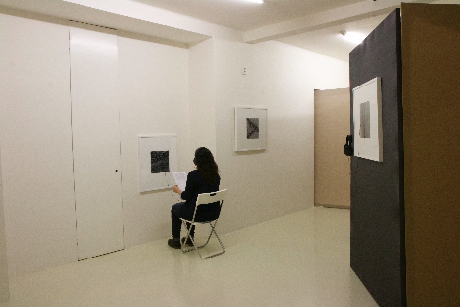
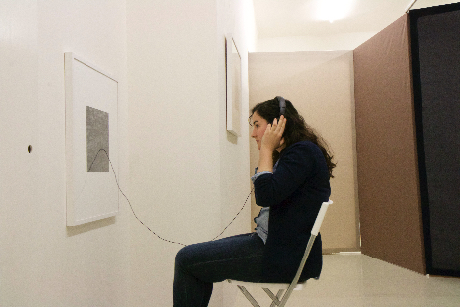
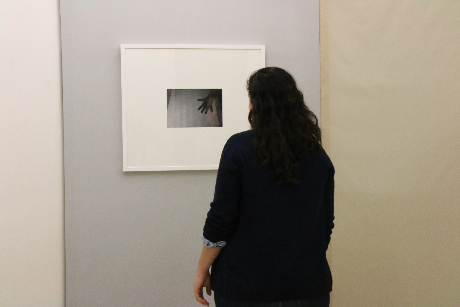
The second stage looks more like a traditional exhibition to most visitors. 5 framed photographs hang on the walls. The images appear at first abstract, but these images are microscopic photographs of drawing on paper; how the graphite literally has been inscribed into the paper. Each of the images have a set of headphones. The visitors listen to the sound in the headphones. In no particular order, three short stories about 1-2 minutes each.
Aim:
Each story respectively introduces a theme on competence: One theme absorbs experience done in the first room, with attention to tracing, inscribing, copying, resemblance etc. Another story explore details and scale resonating with the microscopic photographs. Risk and processes leading to change of perspective is another theme, while capacity to imagine is introduced, in particular as a preparation for stage 3.
Stage 3 / Conversation
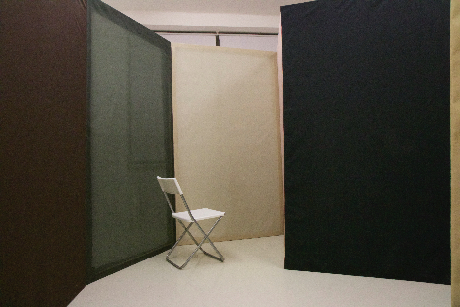
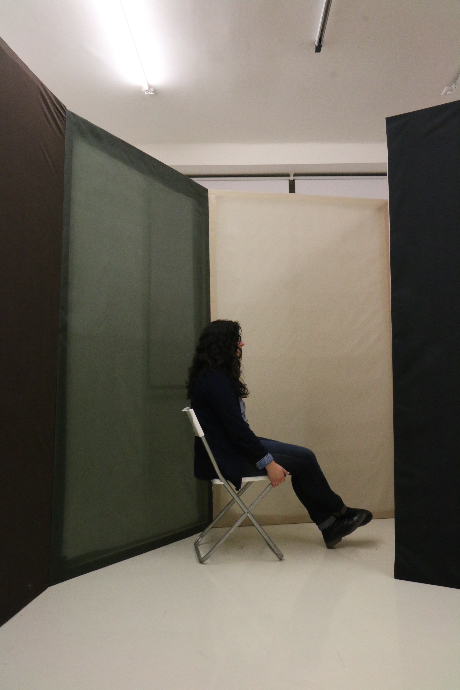
When the visitor enters the third gallery, it may seem kind of empty, apart from a normal chair. A polite voice from behind the blends (screen), will invite the visitor to have a seat, establishing contact and explain that a conversation will take place.
Aim:
The visitor engage in a conversation with the object to establish an imaginary shared environment, using as a point of departure the drawing experience in stage 1. The visitor will be surprised that she or he can in such an easy manner, develop and co-author with a person behind the screen an imaginary concrete conversation that is unscripted and open ended. After 5-10 minutes, the person behind the screen will kindly draw their attention, back to the gallery and explain the visitor how to proceed to the next and final stage of the exhibition.
Stage 4 / Image
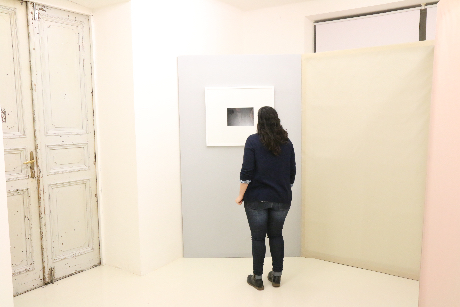
The visitor will go to this last section of the exhibition and in this gallery there is only one single mounted frame with an image. The visitor approach the picture and realize that this is a photograph of their own drawing from the first stage, taken while their arm was put into the hole, for the staff to see if the drawing resembles the real hand. The visitor understand that the staff photographed their hand and arm with their drawing, printed it out and installed it while the person was spending time in the second or third stage.
Aim:
The visitors recall the experience in the other previous galleries, the drawing, stories and conversation. Understanding that time invested at each stage enabled sensitivities to do certain set of competences. Filled with this combination of experiences, resonating in this last and personal image, the visitor leaves the exhibition. Each visitor thus observe only their own image.
…
Our exhibition approaches the question of art-related collaboration by transgressing and expanding the notion of artistic competence. The show addresses capacities to make and imagine while avoiding the typical regimes of object-hood and representation. Instead of simply replicating the division between an artist and an audience, either under guise of relational aesthetics or in form of traditional viewership, our intervention aims at a radical critique of the difference of competences underpinning both of these positions.
We proposed to transform rituals inherent in the traditional form of an exhibition in order to constitute a paradoxical space, where our visitors are welcome to shift between being a creative maker and a reflective viewer of artistic objects. We wanted a visitor to become neither a producer nor a consumer of aesthetical experience. Instead, we introduced our visitors to practically experience two fundamental stances – of creating and of contemplating – during the same visit in the gallery. We design a situation, which forces a visitor to experience his/her own resonance to the material reality and imaginary projections, both characteristic for aesthetical experience. We redirect the investments inherent in aesthetic attention, normally induced by an exhibition, to reflectively combine different modes of experience, inviting our visitors to contemplate the self-generated artistic contents, presented back to them in an aura of a discrete art object.
Thus, we proposed to undermine both spatial (space of exhibiting versus space of practice) and occupational (makers versus viewers) divisions still characteristic for the art world. However, we are not interested in simply reiterating the notion of participation, which only seemingly actives a viewer as a participant, but does not question more fundamental difference between an author and an executor of an artistic script. We wanted a visitor to experience himself as neither a viewer nor a participant in some sort of art performance, in which our competence would be a primary object of consumption. Instead, we stepped back and created an opportunity for a visitor to enter into an active dialogue with his/her own competences as a maker and a viewer of art. And in order to create conditions for this unusual experience to emerge we very carefully orchestrated the process of visiting the gallery.
Considering a more general socio-economic context of our work, one might say that in the micro-scale of an exhibition, we enact the conflation of consumption and production, a development characteristic for post-Fordist economy. However, the contemporary capitalism, in its drive for profit, both eradicates creative imagination and turns creativity into a commodity. Our intervention, going against these developments, is a slightly idealistic attempt to rejuvenate innate human capacities of making and contemplating. We want to occupy cracks opened by an aesthetical experience, instead of trying to commodify them.